


 admin
admin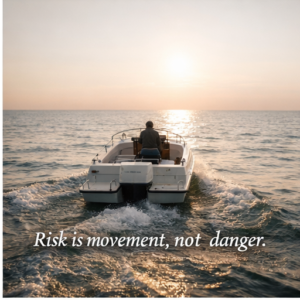
Risk has a bad reputation because it is often associated with things going wrong, with mistakes, or with loss. For many business owners, it feels like something to avoid or minimise as much as possible.
In reality, risk is simply the natural variation around your plans. It is present in every decision you make, whether you acknowledge it or not, and learning how to work with it, rather than avoid it, is what allows a business to grow with more confidence.
When you understand risk, you do not become cautious for the sake of it; you become deliberate. You make clearer decisions, you adjust where necessary, and over time, you build a business that is better able to handle change.
What risk really is (in plain language)
- Risk is uncertainty about outcomes that matter to your business
• It can lead to negative outcomes, but also to positive opportunities
• It can be avoided, reduced, transferred, or accepted, depending on the situation
Three common myths
Myth 1: Risk management is for big companies
The assumption is that only large organisations need formal risk practices, but in reality, larger firms often have more room to absorb mistakes, while smaller businesses feel the impact immediately. Practical risk thinking is therefore even more important at a smaller scale.
Myth 2: Managing risk slows growth
There is a perception that thinking about risk introduces hesitation, but in practice, it removes noise and helps you identify where to move quickly and where to put simple guardrails in place.
Myth 3: Risk means saying no
Managing risk is not about avoiding decisions, but about making them with a clearer understanding of what could happen and what you would do in response.
Everyday examples you already understand
- Pricing: You set a price that balances volume and margin, which is essentially a risk trade-off
• Payment terms: You ask for deposits to manage exposure to delayed payments
• Hiring: You test a contractor before committing to a full-time role
• Inventory: You balance availability with the risk of overstocking
You are not new to risk. What is often missing is a simple, intentional way to step back and think through it.
A simple way to make risk work for you
The most effective approach does not need to be complex. Setting aside time once a month to reflect on a few key questions can significantly improve the quality of decisions:
- What could go wrong in the next quarter, and how exposed are we?
- What could go right that we are not currently positioned to take advantage of?
- What small action could reduce potential downside?
- What small step could increase potential upside?
This kind of structured reflection does not slow progress; it strengthens it. It allows you to move with greater confidence because you are not operating blindly.
The Gaenity view
At Gaenity, risk is approached as a source of strategic clarity. When you understand your exposure, you can design simple protections where needed and take deliberate bets where there is opportunity.
It is not about paperwork. It is about building a business that can move forward with awareness.
Call to action: If you would find it useful, I can share a simple one-page version of this 4Q approach that you can use with your team.
